
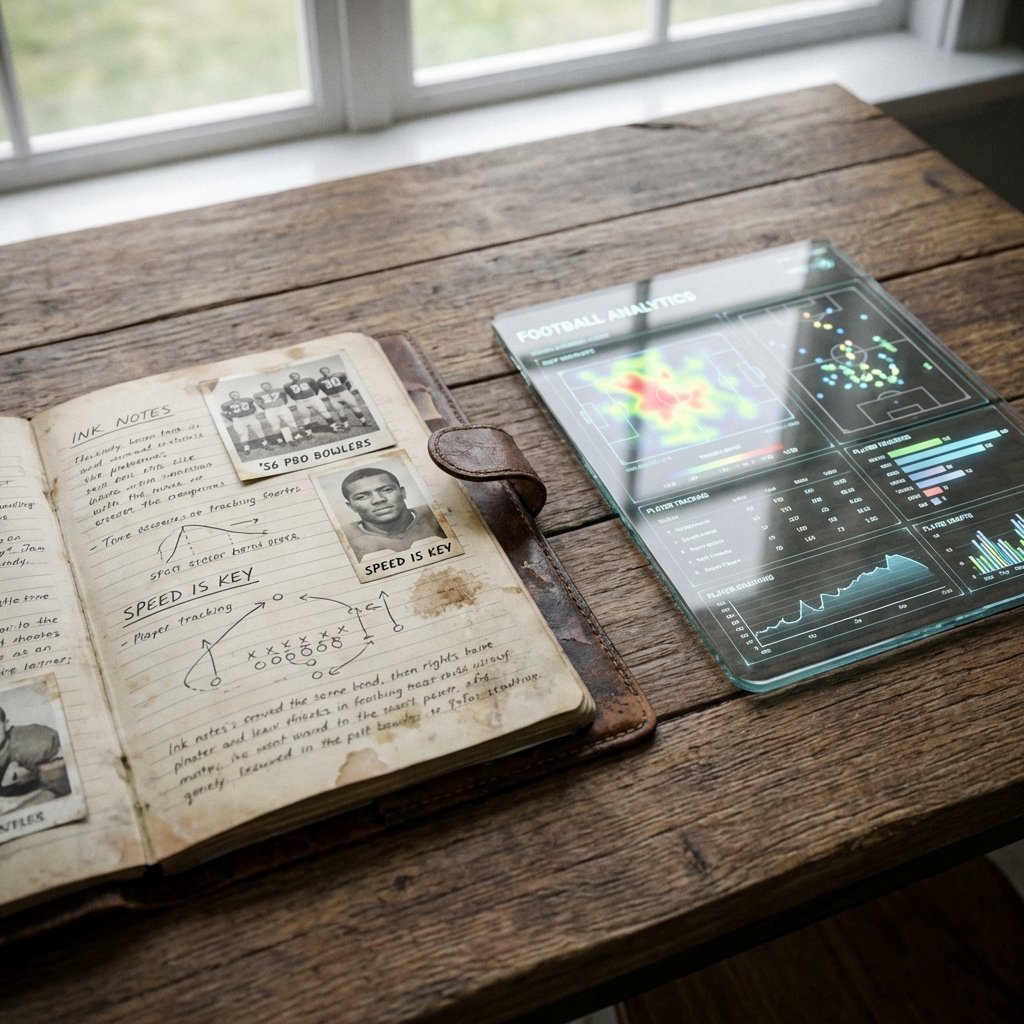
The image of the lonely scout on a rainy Tuesday night in Stoke, notebook in hand, is fading. In its place rises the data analyst, armed with terabytes of video and predictive models.
For over a century, football scouting was an art form. It relied on the "eye test"—the experienced intuition of former players and managers who could spot "that special something" in a player's gait or decision-making. While invaluable, this method had flaws: bias, limited coverage, and the impossibility of being in two places at once.
The Data Revolution
The introduction of Opta data in the mid-2000s started a shift, but the real revolution began with tracking data. Suddenly, we weren't just counting passes; we were measuring the velocity of the ball, the pressure on the receiver, and the expected value of every action on the pitch.
Today, clubs don't just look for "a good striker." They look for a forward who statistically outperforms their "Expected Goals" (xG) by 15%, presses the backline for 60 minutes per game, and has an injury history that suggests longevity.
Hybrid Scouting: The Best of Both Worlds
Does this mean the death of the traditional scout? Absolutely not. At Intelloria, we champion "Hybrid Scouting." Data narrows the field from 50,000 players to 50. The human scout then watches those 50 to assess character, leadership, and adaptability—traits AI still struggles to quantify.
The notebook isn't gone; it's just digital now, and it lives alongside a dashboard of a billion data points.